2 min read
How the APA works, and where hidden commissions come in
A short explainer for anyone outside the charter trade, and a map of the points where money can quietly change direction.
For:Crew and captainsCharter and sales brokersManagement companiesOwners and guests
Download:PDFWord (editable)
What the APA is
APA stands for Advance Provisioning Allowance. On a charter, the guest pays it on top of the charter fee, usually as a percentage of that fee, to cover what they consume: food, drink, fuel, berthing, water toys, local transport and more. It is the guest's money. It is held to be spent for them, and what is not spent is returned.
Under the standard charter contract, the APA is meant to be spent for the client's benefit and accounted for. In practice it is spent by the captain and crew, and in some cases the charter broker controls part of it.
Why it is a point of vulnerability
Three things come together:
- The person spending it is not the person who owns it. The guest is on holiday. The owner may never see an invoice.
- The amounts are large and spread across many suppliers. There is real opportunity to steer an order.
- The guest usually cannot compare. They do not know what the same wine, the same provisions or the same fuel would cost elsewhere.
That is a position of trust with very little visibility, and it is why the standard of conduct must be higher than ordinary business, not lower.
Where the money can change direction
| Step | Proper | Where it goes wrong |
|---|---|---|
| Choosing a supplier | On price, quality, reliability and fit | Because the supplier offered something back |
| The quotation | Written, itemised, comparable | Padded or vague, with a margin built in for a third party |
| The order | Placed by the person authorised, for the client | Placed through an intermediary who is paid by the supplier |
| The invoice | Itemised and kept | Altered, split or relabelled |
| The settlement | Paid from the APA to the supplier | A share paid back, privately, to the person who placed the order |
| The final accounts | Show every cost and every credit | Omit discounts, rebates or incentives received |
The circle, in one sentence
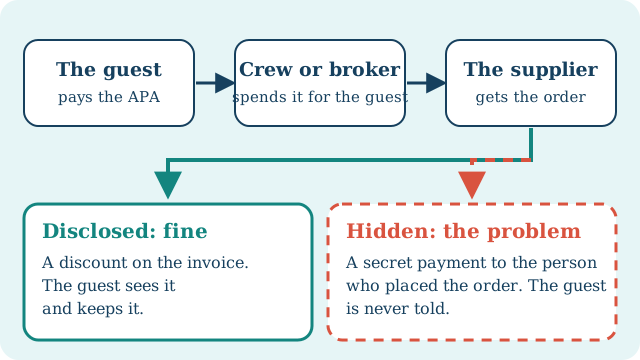
The guest's money goes to a supplier, and a share of it comes back to the person who chose the supplier, without the guest knowing.
Nothing in that circle requires the guest to be overcharged. The supplier may be absorbing the cost out of its margin. It is still wrong, because the person who should have been advising the guest was being paid by the other side. Commission or kickback? explains the test.
What good looks like
- Every supplier quote is itemised and, where practical, compared.
- Every discount, rebate or incentive a supplier offers is passed on to the client or declared.
- The final accounts show all of it.
- The management company can inspect any of it, at any time, without an awkward conversation.
For checklists and templates, see the resources.
Seen something like this?
You can raise a concern or ask a question privately. Nothing leaves us without your permission.
Report a concernGeneral information only. This is not legal advice: see the disclaimer.